
What Are the Lighting Requirements for Soccer Fields
Introduction
Proper lighting is fundamental for soccer fields to ensure player safety, enhance the spectator experience, and maintain high game quality. Without adequate lighting, players struggle to see the ball and each other clearly, increasing the risk of accidents and reducing performance. Spectators, too, require bright, consistent lighting to enjoy the game fully, especially during evening matches.
Modern soccer field lighting primarily uses LED floodlighting technology. LEDs provide a powerful, energy-efficient lighting solution that delivers superior brightness and longevity compared to older lighting systems like metal halide or halogen lamps. Thoughtful lighting design with LEDs also minimizes glare and shadows while enhancing energy savings, making it ideal for both professional stadiums and community fields.
1. Understanding Soccer Field Lighting Systems
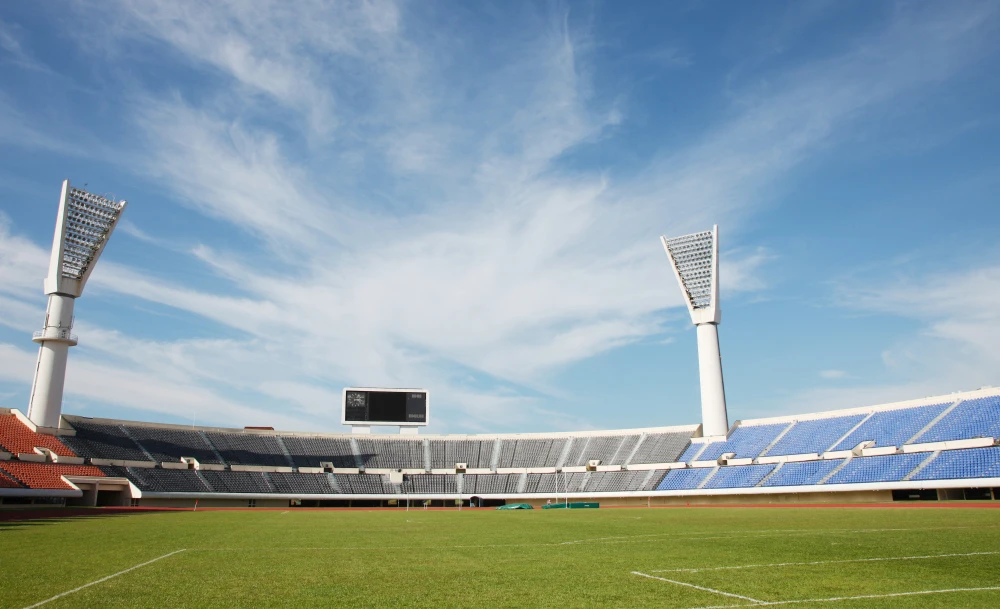
Soccer field lighting systems consist of high-powered LED floodlights mounted on tall poles surrounding the field. These fixtures are designed to deliver wide, even beams of light that illuminate the entire playing surface uniformly. The goal is clear visibility from every angle for players, referees, and spectators.
LED floodlights have several advantages over traditional lighting sources. They consume significantly less power—often reducing energy use by up to 70%—while producing better quality light with higher color accuracy. LEDs also offer instant full brightness without the warm-up delays common to metal halide lamps and have longer lifespans, ometimes exceeding 50,000 hours. This combination of efficiency, durability, and light quality makes LEDs the preferred choice for soccer field illumination.
2. Key Lighting Requirements for Soccer Fields
2.1 Illuminance (Brightness)
Illuminance, measured in lux (lumens per square meter), signifies how much light reaches the playing surface. Different levels of illuminance are required depending on the field’s purpose:
- Training Fields: 75 to 200 lux. These fields benefit from sufficient brightness for practice sessions without incurring the higher costs of competition-level lighting.
- Amateur Matches: 200 to 500 lux. This range supports casual and local competitive play, ensuring players see clearly and reducing eye strain.
- Professional Matches: 500 to 1000 lux or more. Higher brightness helps athletes perform at peak levels and provides clarity for referees and spectators alike.
- Televised Events: Over 1400 lux. Broadcast games require the brightest, most consistent lighting to guarantee excellent camera visibility and viewing experiences.
Maintaining appropriate brightness levels is crucial to avoid dark spots or areas that create difficulty in judging ball trajectory and player movement.
2.2 Uniformity
Lighting uniformity refers to the consistency of brightness across the entire field. A uniform playing surface without dark patches or excessively bright spots is essential. Uneven lighting can hinder players’ ability to track the ball and affect gameplay.
For professional fields, a recommended uniformity ratio (minimum to average lux) of at least 0.6 is standard. This ensures there’s minimal contrast between the brightest and dimmest areas on the pitch, creating a comfortable viewing and playing environment.
2.3 Color Temperature and Color Rendering Index (CRI)
Color temperature, measured in kelvins (K), influences the appearance of the light. For soccer fields, an optimal color temperature typically ranges from 4000K to 5700K. A cooler white light of around 5000K is ideal as it appears crisp and clean, improving visibility and focus.
The Color Rendering Index (CRI) measures a light source’s ability to reveal colors accurately compared to natural light. Training fields require a CRI above 70, while professional and televised matches should have lighting with a CRI above 80 to maintain true color representation, which is important for player recognition and broadcast quality.
3. Soccer Field Lighting Design Considerations
3.1 Number and Placement of Light Poles
The number of poles depends on field size and lighting level objectives. Common configurations include 4, 6, or 8 poles. More poles generally improve light distribution and reduce shadows—critical for player safety and fairness.
When placing the poles, the goal is to maximize coverage without causing glare or light spill into surrounding areas. Corners and sidelines are typical mounting locations to achieve balanced illumination.
3.2 Pole Height
Pole heights typically range between 12 to 30 meters (40 to 100 feet). Higher poles allow light to spread more evenly across the field, improving uniformity and minimizing glare affecting players’ or spectators’ eyes.
Increasing pole height can also reduce the total number of fixtures needed, as each light covers a broader area. However, this must be balanced with fixture intensity and aiming angles for optimal lighting.
4. Technical Specifications for Soccer Field Lights
LED floodlights designed for soccer fields usually range from 500 to 1500 watts each. These powerful fixtures often deliver more than 100,000 lumens, generating bright, consistent light over wide areas.
Durability is essential, so fixtures are typically rated IP66 or higher, ensuring resistance against water, dust, and weather conditions. Good thermal management systems are incorporated to prevent overheating and extend fixture lifespan.
Glare control is a key feature as well, with lenses or visors designed to minimize direct discomfort for players, referees, and fans while maintaining peak illumination on the field.
5. Determining the Number of Fixtures and Total Lumens Needed
The total lighting needed depends on the field size, desired lux level, and fixture output. Approximate lumens requirements vary:
- Training Fields: 100,000 to 200,000 total lumens.
- Amateur Matches: 200,000 to 400,000 total lumens.
- Professional Matches: 500,000 to over 1,000,000 total lumens.
Fixture counts typically increase with wattage and lumen output per unit. For example, a professional field may require 50 or more high-powered fixtures spaced strategically to maintain uniformity and brightness.
6. Soccer Field Lighting Installation Best Practices
Proper installation is vital for maximizing lighting effectiveness. Fixtures should be positioned and aimed precisely to eliminate shadows and glare, and to reduce light spill into neighboring properties.
Mounting stability must be ensured to maintain consistent angles over time, preventing light shifting or flickering.
Regular maintenance, including cleaning lenses and checking fixture alignment, helps sustain optimal lighting conditions and prolongs system life.
7. Frequently Asked Questions (FAQs)
- How long do LED stadium lights last? Typically 50,000 to 100,000 hours, meaning 10 to 20 years of reliable service with proper care.
- What is the cost range for lighting a soccer field? Costs vary widely depending on field size, fixture quality, pole quantity, and installation complexity, often ranging from $30,000 to over $250,000.
- What are the differences between backyard and professional field lighting costs? Backyard setups are smaller and less bright, thus much less expensive, whereas professional setups require more fixtures, higher wattage, and precise engineering.
- What type of lights are suitable for soccer and football fields? High-powered LED floodlights with appropriate lumen output, waterproof rating, and glare controls are standard.
Conclusion
Proper lighting is critical for soccer fields to ensure safety, enhance gameplay, and deliver an enjoyable spectating experience. LED floodlights provide an energy-efficient, long-lasting, and high-quality solution adaptable for various levels of play—from community training fields to professional stadiums.
By adhering to established standards for brightness, uniformity, color quality, and pole placement, field owners and managers can create optimal lighting environments that benefit players, officials, and fans alike.
For customized soccer field lighting solutions tailored to your specific needs, contact expert lighting professionals who can guide you through design, product selection, and installation.